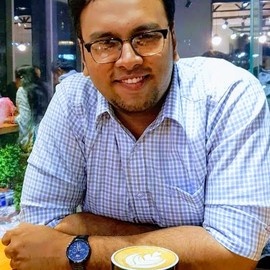
Who am I?




Dayforce — Senior Machine Learning Engineer
I am currently a Senior Machine Learning Engineer at Dayforce, where I design and build full-stack, production-grade ML systems. My work involves developing everything from front-end components in React to back-end data pipelines with PySpark and Delta Tables, with a focus on creating robust, scalable, and fair AI-driven solutions. I manage the end-to-end ML lifecycle, including model optimization, bias mitigation, and MLOps.
Huawei R&D — AI Security Researcher
Previously, as an AI Security Researcher (level: Senior Software Engineer) at Huawei R&D's Anshi Lab (Burnaby, BC), I worked at the intersection of Malware Analysis and Adversarial Machine Learning, balancing the offensive understanding of malware (AI4Sec) with the defensive hardening of LLMs (Sec4AI). I built autonomous agent ecosystems designed to uncover zero-day threats across GPU, NPU, and edge devices. My expertise is in LLM architecture optimization, Transfer Learning, Multi-agent and Tool Orchestration (MCP), and hardware-aware scaling across diverse physical environments.
At Huawei, I led the architecture and development of an Agentic LLM ecosystem that utilizes multiple agents and tools for zero-day binary malware analysis. My engineering philosophy revolves around pushing the boundaries of AI infrastructure - whether by recasting transformer architectures with Vector Symbolic Architecture (VSA), implementing Mixture-of-Experts (MoE) routing, or optimizing hardware deployment across NPU, GPU clusters, and IoT edge devices to achieve massive production performance gains.
UBC — MSc Computer Science
I hold an MSc in Computer Science from the University of British Columbia. My thesis focused on the frontier of AI and software engineering, where my goal was to make software engineering more accessible by exploring how LLMs could reason about code. Before my current role at Huawei, I worked as a Firmware Engineer at MineSense Technologies and as a Research Assistant at the SOftware Analytics and Research (SOAR) Lab at Singapore Management University. I received my BSc in Computer Science and Engineering from North South University, graduating as the Salutatorian with VC's Gold Medal.
Lecturer — Bangladesh
I've always gravitated toward the edges of complexity—places where systems struggle with what humans can reason about intuitively. I began my professional journey in academia as a lecturer in my home country, Bangladesh, delivering hundreds of CS lectures and helping students build confidence in subjects that often feel intimidating. That foundation in teaching shaped my core philosophy: break problems down, understand the system, then push it to scale.
Research & Mentorship
Beyond my engineering work, I am an active published researcher with over 150 citations across A* and A-rated conferences. I also remain deeply committed to community service and mentorship. I actively mentor teams building AI tools for social impact, such as speech-to-text LLMs for medical history collection, and have designed programming workshops to empower the next generation of tech leaders.
Interests
- Unsupervised Learning
- Transfer Learning
- Malware Analysis
- Natural Language Processing
- LLM Optimization
Education
-
MSc in Computer Science, 2022
University of British Columbia
-
BSc in Computer Science & Enginnering, 2018
North South University